
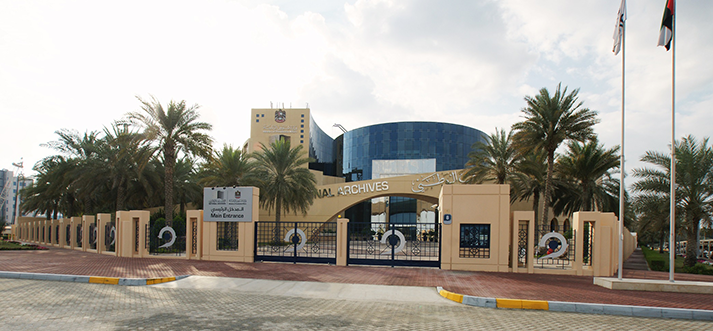
The National Archives hosts a lecture on “Benefit Realization Management” organized by the Project Management Institute
The National Archives hosts a lecture on “Benefit Realization Management” organized by the Project Management Institute
The National Archives hosted at its headquarters in Abu Dhabi a lecture organized by the Project Management Institute – Arabian Gulf Branch, entitled: “Benefits Realization Management”.
The Sheikh Khalifa Bin Zayed Hall at the National Archives headquarters was attended by more than 100 participants from the United Arab Emirates and abroad to follow the lecture on “Benefits Achievement Management”, which took a strategic and economic turn.
Dr. Mazen Qader, Director of Volunteers at the Project Management Institute, thanked the National Archives for hosting the institute’s activities, and its interest in supporting logistical, economic and technical projects that enrich thought and ensure achievement, improve and develop work, which reflects positively on participation in the nation’s development and upgrading.
The Director of Volunteers praised the role played by the Institute, as it aspires through its partnership with the National Archives in such events to disseminate knowledge, activate practical and strategic thinking, and the interactive method followed by the lecturer, in which he relies on discussion to reach constructive and fruitful ideas.
Lecturer Ahmed Fekry, a member of the Project Management Institute, indicated that the benefits to be achieved are not limited to material benefits only, but rather go beyond the satisfaction of customers, the reputation of the institution and others, and the lecturer revealed the importance of the topic of the lecture, which was adopted by the Project Management Institute only a year ago as an economic and strategic approach It should be focused and taught in order to ensure the success of projects that depend mainly on the benefits it achieves.
The lecture touched on an old topic in its content, but new in its presentation and methodology. Since ancient times, the owners of projects have been looking to make a profit from them, but achieving profit benefits no longer depends on expectations, but has become a specialized study that cannot be bypassed. Because it contributes to determining the company’s ability to survive, and the increase in profit indicates the continued success of the company in the future.
The lecturer shed light on how to determine the benefits of the project, and ensure that the benefits are realized in order to obtain the best investment from the cost spent on it. Pointing out that after the financial crisis that hit the global markets in 2008, those in charge of the projects became more accurate, and they are interested in the economic methodology, and they are investigating the benefits that can be achieved, and they are looking into the feasibility of their projects in order to increase the profits and the desired benefits.
At the end of the lecture, Ms. Samar Omar Al-Mashjari, Director of Projects Management in the Abu Dhabi Emirate branch, honored the lecturer and all the volunteers who contributed to the success of the event.
It is noteworthy that the “Benefit Management” lecture coincided with the fiftieth anniversary of the founding of the Project Management Institute, which has more than 500,000 members worldwide.
The National Archives enriches the most capable summit in Moscow with the historical dimension of the state
Introduces the public to the ICA Congress 2020 in Abu Dhabi
The National Archives enriches a more capable summit in Moscow with the country’s historical dimension.
The National Archives concluded its participation in the activities of Aqdar World Summit in its third edition, which was held under the slogan “Empowering Communities Globally: Experiences and Lessons Learned”, which was held in the Russian capital – Moscow, under the generous patronage of His Highness Sheikh Mohammed bin Zayed Al Nahyan, Crown Prince of Abu Dhabi and Deputy The Supreme Commander of the Armed Forces, from August 29 to September 1, 2019, coinciding with the launch of the activities of the Moscow Global Forum, which brought together a group of Emirati ministers, senior officials, academics and researchers, and the National Archives aimed, through its participation in this session, to enrich the activities of the summit with the historical dimension of the United Arab Emirates. And the global announcement of the International Council on Archives Congress 2020, which Abu Dhabi will host next year.
The participation of the National Archives was as usual in the previous two summits, in Aqdar Summit, which in its third edition has become a unique local and international event. To present to the world the historical dimension of the United Arab Emirates, as a model for an environment in which tolerance prevails, and as the National Archives believes that the march of the UAE since the establishment of its federation under the leadership of Sheikh Zayed bin Sultan Al Nahyan – may God rest his soul – up to its development and prosperity under the wise leadership that It followed the path of the founding leader, worthy of reaching the world, to be an ideal approach in human empowerment, the stability of societies and their sustainable development.
In view of the importance of the International Archives Council 2020 Congress, which will be hosted by Abu Dhabi in November next year, with the participation of thousands of archivists from all over the world, and discussing global archival issues in the field of archiving and documentation, the National Archives will inform the participants of the Aqdar World Summit held in Moscow about the Congress The International Archives Council 2020, which will be held under the slogan (Empowering Knowledge Societies).
It is worth noting that the National Archives organized, on the sidelines of the summit, a documentary exhibition that included historical photographs that present to the Russian public aspects of the historical dimension of the United Arab Emirates. And his arrival in the country to the era of progress, and placing it in a record time in the ranks of developed countries, and in his footsteps the wise leadership followed until the UAE reached the peak of its prosperity and development, and this supports the relations between the two friendly countries in all its aspects.
The National Archives distributed a large number of its following publications to the public participating in the summit: book: (Zayed, a man who built a nation), book: (Zayed from Challenge to Union), book: (Khalifa is a Journey to the Future), and book: (Qasr Al Hosn).
It is noteworthy that the National Archives has activities and events closely related to the axes of the Aqdar Summit in its third edition, and that through its constructive initiatives and achievements, it is considered one of the most prominent distinguished landmarks of the UAE in many areas that promote the dissemination of a culture of tolerance, cooperation and love that is capable of facing contemporary challenges.
The National Archives Holds the Preliminary Meetings of the ICA Congress – Abu Dhabi 2020
The National Archives Holds the Preliminary Meetings of the ICA Congress – Abu Dhabi 2020
The National Archives holds intensive meetings in preparation for the ICA Congress 2020, which will be hosted by Abu Dhabi from 16 to 20 November next year under the theme “Empowering Knowledge Communities”. The meeting will be attended by senior officials of the International Council on Archives “ICA”. The participants will discuss strategic topics that will enrich the ICA Congress 2020 in Abu Dhabi. The Congress will be held for the first time in the Middle East. It aims to sharing knowledge and achieving innovative topics.
The agenda of the preliminary meetings on 31 August – 1 September 2019 at the St. Regis Saadiyat Hotel, Saadiyat Island in Abu Dhabi includes a series of discussions on the formation of the necessary working committees to follow the effective coordination to fulfil all the requirements of the Congress, and lay down the agenda to help participants to reach innovative ideas and interesting topics that attract the attention of the archivists and enrich the ICA Congress 2020.
Through the ICA 2020 Congress, the National Archives aspires to promote the UAE’s mission and the culture of tolerance the UAE people believe in and consider it a way of their life, the UAE’s role in preserving the nation’s memory and its contribution to the preservation of human heritage.
It is noteworthy that the National Archives has keen interest in holding the ICA Congress 2020 in Abu Dhabi in the presence of more than 3000 archivists with the objective of strengthening the bonds of dialogue among participants from nearly 200 countries around the world, discussing the basics of protecting the documentary heritage and the current archival practices and their challenges and the critical role played by the people working in the fields of archiving and information systems in the knowledge communities of the 21st century.
The ICA Congress provides the professionals in the field of archiving and its related information areas with the prospects of researching the implications of the use of modern technologies such as artificial intelligence, examining the role of archives in maintaining sustainable development, providing evidences and ensuring future information security.
The ICA Congress pays a great attention to the documented information as it forms the core of sustainable knowledge; therefore, it will consider fortifying its access and protecting it from the impact of climate, theft, illicit trafficking, etc. The theme “Empowering Knowledge Communities” has been chosen to promote interdisciplinary thinking and explore new and emerging technologies and strategies within the scope of the International Council on Archives.
As the National Archives has always been an active member of the International Council on Archives, it contributes to the preservation of the records and archival collections as they form an essential pillar of knowledge society. The quadrennial congress meetings will be held for the first time in an Arab country and will coincide with World Expo 2020 in Dubai.
The National Archives has held several meetings with leading World archivists in order to organize the ICA Congress 2020 in the best way that suits the host country of this large archival event, and will reflect the progress it achieved in organizing international events. It will also show the keenness of the UAE’s leadership and people in taking every all measures to preserve the documentary heritage that can be relied upon in making the future.
The National Archives receives a large number of (hunting and equestrian) audience on my platform
The National Archives receives a large number of (hunting and equestrian) fans on its platform
The National Archives platform participating in the Hunting and Equestrian Exhibition received a distinguished turnout from the audience of the exhibition, due to its richness in historical photos that document aspects of the activities of the founding leader, Sheikh Zayed bin Sultan Al Nahyan – may God rest his soul in peace – and his interests in hunting and equestrian. In conjunction with the Year of Tolerance, the National Archives platform presents A documentary film will be shown on a large screen presenting some of the positions of Sheikh Zayed, who laid the foundations for a culture of tolerance that made the UAE an oasis of tolerance and moderation, until it became an ideal model in applying the values of tolerance and peaceful coexistence.
The National Archives platform for this year was full of stories that resulted from the “Zayed 100 Stories” initiative, the national initiative for students launched by the National Archives in cooperation with the Ministry of Education. The National Archives focused on presenting stories that deal with aspects of the founding leader’s interest in and encouragement of equestrian sport, and his practice of falconry as one of the most important sports inherited by children from parents and grandparents. Perhaps one of the most prominent stories presented on the platform is the book (Story Faris).
Through its platform, the National Archives presents to the audience of the exhibition the historical dimension of the United Arab Emirates, which is a qualitative addition that enriches the contents of the exhibition and increases its diversity. The holdings of the archive of photographs and documentaries preserved in it.
The participation of the National Archives in the seventeenth edition of the Hunting and Equestrian Exhibition comes as a beacon that attracts hunting, hunting and equestrian enthusiasts, and lovers of heritage. , and its principles and foundations that are based on noble values and consolidate good qualities, and its role in promoting inherited culture and traditions.
At the 6th Teachers Forum, the National Archives stresses The Significance of the Role and Status of Emirati Women, the True Symbol of Tolerance.
The 6th Teachers Forum participated in “Covenant for Million Tolerant” to promote the values of tolerance
At the 6th Teachers Forum, the National Archives stresses The Significance of the Role and Status of Emirati Women, the True Symbol of Tolerance.
The National Archives, at the Sixth Teachers Forum, informed a large audience of Arab and foreign teachers about the significance of the exceptional role that Emirati women play in various international humanitarian community fields and the great support they receive from the wise leadership. Aiming at strengthening the concepts of tolerance and moderation and reinforcing national identity, the National Archives, in collaboration with Zayed House for Islamic Culture, encouraged teachers to sign the Covenant for Million Tolerant under the slogan: Participate with Us and Be Tolerant.
The National Archives organized a lecture to the participants of the 6th Teachers Forum, where it seized the opportunity of celebrating the Emirati Women’s Day to extend its warmest congratulations and best wishes to Her Highness Sheikha Fatima Bint Mubarak, the Mother of the Nation, who has been supporting women and their empowerment staunchly. It also congratulated all Emirati women for their impressive contribution and stressed that they will never cease to be a true symbol of tolerance and underscored their major role in building the nation. The lecture was delivered by Dr. Aisha Bilkhair, Research Advisor at the National Archives. She informed the participants about the UAE history, culture, heritage and deep-rooted values. Furthermore, she shed light on the Emirati women’s role in the past and the present, and their efforts in building the homeland focusing on the vital role they played in various areas in the past despite the harsh conditions, their evolution as they acquired knowledge and their cooperation with men in the developing the society and building the nation. She said that Emirati women cherish their values and originality, adhere to the identity of their homeland and declare their loyalty to the wise leadership who gives them full attention and support. Dr. Aisha Bilkhair congratulated Emirati women on their day in recognition of their giving in all areas and their continuous contributions.
Zayed House for Islamic Culture presented the initiative of the Covenant for Million Tolerant at the Sixth Teachers Forum hosted by the National Archives, and it is noteworthy that the participants signed the covenant online.
The participation in the Covenant for Million Tolerant fulfils the UAE’s vision to promote the culture of tolerance that the late Sheikh Zayed Bin Sultan Al Nahyan established and our wise leadership pursued to make the UAE a model that applies the values of tolerance and peaceful coexistence where more than 200 nationalities live decently and respectfully.
National Archives Documents “Al Maqidh” (Summer Residences) memories through Oral History
National Archives Documents “Al Maqidh” (Summer Residences) memories through Oral History
The National Archives is concerned with oral history, which documents the history and heritage of the UAE through oral accounts of Emirati senior citizens. In this context, it documented their stories of Al Maqidh trips to cooler places.
Al Maqidh trips used to be one of the important Emirati rituals to escape the heat of the summer through traveling to cooler resorts. Urban residents in UAE used to travel with their families to mountains and oases, seeking cool weather, fresh fruit, vegetables and fresh spring water.
Memories of those days were a main area of interest in oral history interviews. Mrs. Rafi’a Al Khmairi from Abu Dhabi narrated her story about her family’s summer journey who says, “We used to spend winter months in Abu Dhabi where we lived. As soon as it gets extremely hot during the summer season, I used to travel with my family, through the sea, to mountaintops in Ras Al Khaimah seeking cool air. My family owned a huge boat (Jalbout) named “Al Hisan”, made of wood, and was utilized for different tasks. When one of the grandparents passed away, we started going to Al Ain City during the summer, where my father owned a home near the Mosque of Sheikha Salama Bint Butti, may she rest in peace, currently in the Souk (market) area”.
Narrator and poem Salem Eid Obaid Al Muhairi from Al Ain remembers Al Maqidh saying “We used spend autumn in Al Ain. My family travelled to inland oases during the summer when dates are ready to be picked, a season called Al Bishara (good omen), where the first produce is picked during hot summer seasons. That is when people travelled to summer residences, to be close to their palm gardens, such as Al Hili, Al Masoudi and Al Qattara areas, and where they sought to live near the fresh water of the Aflaj, and ate dates, their main source of substance”.
Narrator Saeed Ahmad Rashid Matar Al Mansouri from Zayed City in Al Dhafra area told his story; “We used to spend the summer season in Al Hamra, a coastal area in the Emirate of Abu Dhabi, and traveled on camelbacks to Liwa area during the autumn. During the winter, we traveled to Al Khatim area and to Al Taff area, located between Abu Dhabi and Al Ain, in the north. We lived on dates. When it gets cold, men would go to Al Taff to get wood and sell it in Abu Dhabi, in order to buy food and supplies for three to four months”.
Narrator Hamdan Abdulla Sweidan Al Shamsi from Dubai says, “During the summer season we used either to go to Oman near Al Dhahira area, or stay in Dubai. We lived in huts made of palm fronds. Very few homes were made of mud”.
Narrator Hamdan Mohammed Saif Al Qawazia from Ras Al Khaimah talked about his family’s summer trips: “Summer residence was different from winter residence. We used to spend winter season near the sand areas, and we travelled to places closer to palm trees during the summer. We lived in huts made of palm fronds. We survived on dates and sold dates in Dubai to buy food. We planted tobacco in the winter, and picked it during the summer to sell it in Dubai”.
In the book “Their Memory Our History”, published by the National Archives, Saeed Ahmed Nasser Bin Loutah from Dubai remembers Al Maqidh trips saying: “Pearling season took about four months and was major source of livelihood. While men at sea, women picked and stored dates in Al Batinah, Oman, RAK and Sha’am. They went to areas in Oman such as Ghamdha and Khasab seeking fresh water”.
“Women mainly prepared for summer journey, due to absence of men, who were pearling, and made agreements with camel owners who collect fees for transporting them. Camel owners made good business during summer seasons because of high demand. In some areas families traveled on ships instead of camels, because of the abundance of materials, supplies and gifts they brought with them on the journey back from Al Maqidh”.
Dr. Aisha Ali Ahmed Bin Sayyar from Sharjah was quoted in the book “Their Memory our History” as saying: “During hot summers, we went to summer resorts in RAK, where the weather is cooler; water is plenty, as well as palm gardens, almonds, lemon and some vegetables. My family took a boat to get to our farm in RAK, Al Za’abi boat used to transport people from Sharjah to RAK and bring them back at the end of the summer. Then they would use cars, mainly Land Rovers, which often were stuck in sand and people used handles to get them out. They waited until the tide is low so they can drive along the coast and away from the sand”.
Mr. Obaid Rashid Ahmed Bin Sandal Al Ali says in (Their Memory our History): “Before men sailed for pearling, they would give down payments to women in the family to help prepare for the summer journey and pay camel owners who will carry them to Oman or Liwa. Travelers would use some of the money to buy gifts for farm owners. Thus, it was an integrated society”.
Life in the past was different from modern Emirati lives. Emiratis ate what they picked and took shelter in summer residence, near fresh creek water.
Narrator Sheikh Sultan Bin Ali Bin Saif Al Khateri from RAK said: “During the hot summers we traveled to Al Dhaid and Adhan, to pick dates and store it for the rest of the year.”
In the past, Al Ain oases were most famous. Rashid Saif Balhaimah Al Dhahiri from Bidaa Bint Saud in Al Ain described how Al Ain City was almost uninhabited; people preferred to live near farms and palm gardens. Half of the Bedouins spent the summer in the city, while the other half spent it in the countryside, and they exchanged roles according to need. During the summer season families paid small amounts to others to care for their animals at home while they were staying in summer residence.
God has granted UAE many blessings, including modern air-conditioning; thus, summer traveling regressed. Since Al Maqidh’s trips were full of challenges, and the UAE nationals resorted to such trips to escape the heat of the summer, they were associated with memories, tales and stories still engraved in the memory of the elderly Emirati citizens. In its turn, the National Archives is collecting the remaining stories and memories of Al Maqidh’s trips in order to save them for future generation as part of our Memory of the Nation.
The National Archives continues its preparations for the 6th Teachers Forum
The National Archives continues its preparations for the 6th Teachers Forum
The National Archives continues its preparatory meetings with the strategic partners to determine the requirements of the 6th Teachers Forum (22th -28th August 2019), set the final schedule of the visits and the program and identify the topics to be addressed.
Held at the beginning of each academic year, this forum has become an annual informative event through which the National Archives seeks to enrich the Arab and foreign teachers’ information about the UAE history and heritage. It also aims to broaden their knowledge with the community values and the methods of communicating with students and their parents by means of observing customs and traditions that are based on tolerance and coexistence among the various nationalities living in the UAE.
A series of preparatory meetings were held at the NA premises and other educational institutions focusing on the most important topics to be addressed at the forum such as the values of coexistence and tolerance in the UAE, Emirati women empowerment, and the UAE historical legacy and community traditions and characteristics, etc.
The NA focuses on the importance of supporting and providing teachers with curricula supporting materials and classes as well as the importance of taking advantage of its new project, Arabian Gulf Digital Archive portal, and the NA historical documents, publications and facilities.
The NA and its strategic partners, which include Abu Dhabi Department of Education and Knowledge, Ministry of Education and Emirates National School (ENS), aim to meet the educational field requirements to promote its services.
The 6th Teachers Forum will kick off on August 22nd, 2019 at the NA premises where the ENS educational staff will be received. It is worth mentioning that the forum events will take place at the NA headquarters and the Teachers Training Institute in Ajman.
The National Archives Participates in the Third Edition of the (Summer Reading Festival)
With A number of Reading, Educational and Artistic Workshops That
Promote the Culture of Tolerance
The National Archives Participates in the Third Edition of the (Summer Reading Festival)
The National Archives – within the framework of its social and community responsibilities and its role in the civic education of generations – reinforces the “Summer Reading Festival 2019” initiative of the Ministry of Education in its third edition, with a series of reading, educational and artistic workshops in Dalma Mall, Abu Dhabi, during the period from 18 to 20 August, 2019.
These workshops came in line with the directives of His Highness Sheikh Mohammed Bin Rashid Al Maktoum, Vice President and Prime Minister of the UAE and Ruler of Dubai, to encourage reading to promote the spirit of loyalty and belonging to the homeland, the supreme national values and the righteous moral behavior.
The themes of the workshops which were delivered by a number of skilled child-education specialists, contribute to promoting the culture of tolerance among community members, and reflect the visions of the Founding Leader Sheikh Zayed Bin Sultan Al Nahyan, who instilled the values of tolerance in the UAE society. They complement the Ministry of Education’s efforts towards disseminating this culture in schools.
The reading and educational workshops conducted by the National Archives for all the (Dalma Mall) visiting children tackled three educational booklets issued by the National Archives, namely: (Zayed: From Challenges to Union), (Khalifa: Journey Into the Future), and (Qasr Al Hosn: The History of the Rulers of Abu Dhabi 1793-1966).
This initiative also presented a number of reading and educational workshops which tackled the remarkable stories created by the students participating in the National Archives’ Initiative (Zayed 100 Stories), the most prominent of these stories are: (Sheikh Zayed’s childhood), (Zayed The Man of Government), (Zayed and the Story of the Union), (Zayed and the Union Achievements), (Zayed quotes and Lessons), (The Story of A Knight), (The Green Hand), (The Desert Conqueror) … etc. The importance of these stories stems from the fact that they highlight the efforts, achievements and values of the Founding Father and Builder Sheikh Zayed Bin Sultan Al Nahyan that promote national, behavioral, knowledge and social values and the culture of tolerance among school students who will follow in his footsteps in the future march for the homeland building, advancement and development.
The artistic workshops conducted by the National Archives as part of these activities involved coloring some of the traditional and Heritage elements or drawings; such as: the Jahili Fort and the national figures or symbols that children should be acquainted with and educated about during their up-bringing process.
The National Archives team informs the public about the “Inspiring Tales Initiative” launched by the National Archives in cooperation with the Ministry of Education, in their joint efforts to promote the values of benevolence, philanthropy, humanity and positivity among students, and to encourage them to engage in historic scientific and academic research.

(Liwa) Celebrates Coexistence and Tolerance and Highlights Sheikh Rashid’s Efforts in Establishing Dubai Airports
In issue (21) recently published by the National Archives
(Liwa) Celebrates Coexistence and Tolerance and Highlights Sheikh Rashid’s Efforts in Establishing Dubai Airports
The 21st issue of the National Archives’ Liwa Magazine celebrated coexistence and tolerance in the UAE society, which is an excellent model of security and peaceful social coexistence among the world’s contemporary societies. The study, written by Dr. Fatima Al Sayegh and published by Liwa magazine, confirms that this pioneering model draws its values from the historical, cultural and social heritage of the UAE, dating back thousands of years.
The study highlights the roots of tolerance and peaceful coexistence in the UAE since the ancient times. The contemporary measures the UAE took to make the country safe for all, the policy and visions of the Late Sheikh Zayed Bin Sultan Al Nahyan, which were based on tolerance, and calls for peaceful coexistence among races. This policy has become deep-rooted for the UAE in the country and abroad, has made UAE a safe haven for the millions of people living in it. The article concludes with an analytical view of the importance of coexistence and tolerance in making our modern world free from all forms of violence and terrorism.
“Sheikh Rashid Bin Saeed Al Maktoum and the establishment of Dubai airports” is the most important headline in this issue of (Liwa). This article was written by Dr. Alia Mohammed Najib Saqr, who pointed out that the end of the 1950s was a turning point in the Emirate of Dubai; as Sheikh Rashid Bin Saeed Al Maktoum began to establish the emirate’s infrastructure. Thus, Dubai had institutions appropriate for the development in the economic and demographic sectors, and that initiated the need for establishing a civil airport.
This study points to the role of Dubai airport in attracting airlines from all over the world at that early stage of the developing Emirate, the most important projects that had made progress and it documents Sheikh Rashid’s efforts to establish the airport and the British opposition, his executive efforts prior the inauguration of the airport followed by the opening of the asphalt runway in 1965, and its promotional measures. The study confirms that Dubai Airport led to a series of upturns in the Emirate. Establishing airports in Dubai was a need to absorb the rise in trade movement there. Sheikh Rashid took all measures to improve Dubai trade interests in order to establish the pillars of trade and provide the necessary services to traders and businessmen.
The new issue of Liwa sheds lights on topics pertaining to the history and archaeology of the UAE and the Arabian Gulf region. The first study in this issue was written by Khalid Hussein Salih entitled: “History in Mleiha and Southern Arabia; Contacts and Influence). The study shows Mleiha’s strategic central position in Sharjah, where many evidences proved that Mleiha exchanged trade with several Arab and foreign trade centers between late third century BC and mid fourth century BC. Due to its strategic position, Mleiha participated in the culture at the time. It had a great role in trade exchanges. The study lists the most important characteristics of Mleiha and the evidences of its contacts with southern Arabia in ancient times.
Liwa Magazine also documents in its new issue aspects of the life of Sheikh Zayed Bin Saif Bin Mohammed Al Falahi by Saeed Al Suwaidi who derives information from British documents (1820-1825), the oral history of the Al Bu Falah clan and their genealogy in general and the genealogy of Al Nahyan in particular. Sheikh Zayed Bin Saif Al Falahi was known to have signed a peace treaty in 1820 on behalf of Sheikh Mohammed Bin Hazza Bin Zaal. The study deals with the lineage of Sheikh Zayed Bin Saif Al Falahi and his term as acting ruler of Dubai, the reality of Dubai at his time, in addition to some of the events happened during his reign and the rise of Sheikh Tahnun Bin Shakhbut to power. The study informs about the life of Sheikh Zayed Bin Saif Al Falahi to the end, and deals with the various aspects of his character during his term of rule, which has witnessed a lot of turmoil and challenges.
The English part of Liwa Magazine included two studies: the first entitled: “Three Portuguese Documents on the Arabian Gulf and an Appendix on Trade and Taxes), and the second entitled: “Sheikh Zayed Bin Saif Bin Mohammed Al Falahi” in British documents 1820-1825.
The National Archives Organizes a National Lecture on the Three Islands for Abu Dhabi Securities Exchange staff
Evidences and documents proving the UAE’s right to the three islands
The National Archives Organizes a National Lecture on the Three Islands for Abu Dhabi Securities Exchange staff
The National Archives has organized a national lecture entitled: (The Three UAE Islands, A Proven Emirati Right) attended by a delegation of Abu Dhabi Securities Exchange and its administrative apparatus who were visiting the NA. The lecture focused on the case of the three islands in the Arabian Gulf: Abu Musa and Greater and Lesser Tunbs. It sheds light on their historical background, the UAE’s sovereign rights to them, the historical facts and legal evidences used by the UAE in proving its ownership.
The lecture delivered by Mohammed Ismail Abdulla, Educational Programs Officer and lecturer at the NA, concluded with predicting the future of settling the dispute over the islands. The lecture also pointed out the evidences, which the UAE possesses to prove its ownership and the historical documents, which invalidate Iran’s ownership.
Abu Dhabi Securities Exchange delegation consisting of 23 employees and administrators learned about the NA role in organizing the government archives across the UAE, its role in the next stage according to the best global practices and its interest to match its future plans with the UAE vision 2021.
The delegation has appreciated the NA role and development as well as the importance of its historical information pertaining to the UAE
During its visit, the delegation had a tour of Sheikh Zayed Bin Sultan Hall, which contains samples of written documents, maps and historical photographs that document the establishment stages of the UAE federation. After that, the delegation members watched, in Sheikh Mohammed Bin Zayed Hall, a 3-D documentary film about the UAE past and present and about the NA and its role in preserving the nation’s memory.
The National Archives participates in the celebrations of Abu Dhabi Corniche Golden Jubilee
With written and photographic documentation of the development of the Corniche in which the wise leadership is interested.
The National Archives participates in the celebrations of Abu Dhabi Corniche Golden Jubilee
The National Archives has participated in the celebrations of Abu Dhabi Corniche Golden Jubilee with a historical photo exhibition that showcased a large number of photographs documenting Sheikh Zayed Bin Sultan Al Nahyan’s interest in this important part of Abu Dhabi city which continues to receive considerable attention from our wise leadership. The exhibition exemplifies the role of the National Archives in documenting the development stages of the Corniche. It offered visitors the opportunity to learn about the establishment of the Corniche and it development until the present-day as it represents a significant part of the growth of Abu Dhabi city.
The National Archives exhibition, which is held in celebration of the Golden jubilee of the Corniche, attracted a large turnout as it showed how the Corniche was before the developments it went through at the hands of Sheikh Zayed Bin Sultan Al Nahyan. The photos illustrated how the touch of the Founding Leader Sheikh Zayed turned the Corniche into a beautiful façade of the city and a recreation space for people throughout the year. The exhibition brought to memory the old fountain and the surrounding park, which were one of the Corniche main landmarks.
In respect of the National Archives participation in this celebration, H.E. Dr. Abdulla Mohammed Alraisi, Director General, said “The National Archives participates in this celebration on this occasion, which is close to our hearts, with a photo exhibition to give its visitors a clear idea about the nation’s history and the Leader’s determination. Abu Dhabi Corniche is part of Abu Dhabi island which got a share of the Founding Leader Sheikh Zayed Bin Sultan Al Nahyan’s wisdom and sincere efforts; thus, it was transformed from a pristine coastline with few barasti huts into an iconic beachfront that emulates the World’s most beautiful urban beaches, which won the first prize in several international competitions.”
His Excellency added that the National Archives provides written and photographic documentation of the Corniche development stages. If interested in tracing back the history and development of this area, one can find ample information about the Corniche development stages in the UAE Chronicles and Zayed Chronicles (1966-2004) published by the NA, which continues to record the great attention of our wise leadership to the Corniche in particular, and to Abu Dhabi city and the UAE in general.
National Archives documents memories of Emirati pilgrims in the past.
In the Company of Allah, the Merciful: a Journey of Hardships and Devotion.
National Archives documents memories of Emirati pilgrims in the past.
National Archives Oral History Section interviews elderly Emirati citizens to document their memories of the Hajj journey in the past. The pilgrimage to the Holy Land is one of the canons of Islam. Older Emiratis narrate their memories of pilgrimage and detail hardships they went through in order to meet their Islamic duty of performing Hajj. In old days, the pilgrimage journey took months. During the long trip to Mecca and Medina, pilgrims suffered severe physical hardships. They had to endure severe weather conditions and lack of food and water, as the caravan went through the tough desert terrain.
Senior citizen from Al Ain Khalaf Sa’eed Al Thahiri narrates his memories during an interview: We went to Hajj mounting camels from Abu Dhabi and Al Ain. The trip to the holy land lasted two months. We had to be cautious and take turns to protect the caravan against bandits.
Ali Ahmad Shaheen from al Thafra tells the story of a pilgrim; When we arrived to Mecca we were met by a “mutawaa” (a person who volunteers to lead the pilgrims rituals), who asked where we were coming from and how long it took the caravan to reach the Holy Land. The pilgrims told him that it took exactly two months. They were then asked. “In your homeland, do you help the needy and neighbors, and welcome guests?” The pilgrims said in deed this is innate among us. The “mutawaa” would then say, you have performed your Hajj (a person who gives the poor and relives the needy is rewarded by Allah at home, as if they performed Hajj).
In another interview, Khalid Abdullah Sleiman Al Hanani from Abu Dhabi recites: “We would ride camels to the Holy Land. Those who want to go to Hajj would make a group and rides with owners of camels. We did not have cars back then. There were very few airplanes. Only rich people travelled on airplanes.”
Narrator Klaithem Kshaish Mubarak Al Shamsi from Al Ain talked about hardships: “My father told me it took ninety days to reach the Holy Land. Some of the devout people who traveled to perform Hajj would not make it and pass away during the journey.” She describes that her father himself was not able to perform pilgrimage. However, he was able to talk about it to his children. He describes the scene when people are getting ready to take the trip to the Holy Land. They would gather foodstuffs that would remain good to eat in the hot desert, such as dry bread (Rgag), small dried fish (sehna), and water and butter. If the group does not own a compass, they would use a desert guide.
Fatimah Salim Rashid Al Ketbi from Al Ain talked about the Hajj and she is grateful that she was able to do Hajj and Omra (lower Hajj) nine times and she went to the Holy Land on an airplane every time.
In Her book “Hajj; a Memorable Journey”, Dr. Aisha Balkhair, NA Research Consultant, says that Sheikh Zayed, may he rest in Peace, empowered his people and the Islamic nation, to perform Hajj. “Sheikh Zayed Memoires”, published by National Archives, documented Zayed’s humanitarian initiate to facilitate the Hajj trip for everybody, as part of his commitment to Islam. In 1980, Sheikh Zayed sent 600 people to Hajj at his own expense. Sheikh Zayed supported the Hajj trip to delegations from other Muslim countries.
In her book, Dr. Aisha shed light on Hajj in old days. She said Emiratis has always paid special attention to Hajj as one of the five canons in Islam. In old days, people received “barwa”; an official written order to dispense amounts of money written in the document, for performing Hajj. Persons who receive a “barwa” seek support from Sheiks for foodstuffs such as rice, flour, coffee and sugar. The state met all needs during the official Hajj season, including health services.
In “Their Memories are Our History” book, published by NA, documents narrative of Rashid Saif Rabi’ Balhamyah Al Thahiri described a race of Camels called “Al Hayah”. “…we depend on camels a lot and care for them. Our camels today descend from our ancestors, and they will go to our children. The whole race descend from “Al Hayah” (Al Hajjah). It was called that because my grandfather rode this camel to Hajj twice with sheikh Mhaimeed Al Salmeen Al Mansouri. Our camels now descend from it.
The journey from Al Ain to Mecca mounting camels lasted for four month; two months to Mecca and two months back.
“Their Memories are our history” book confirms what narrator Hajj Se’ed Ahmad Naser Bin Loutah; “…I went to Mecca for Hajj when I was sixteen. I remember it was during the rule of King Abdulazeez Bin Abdelrahman Al S’oud. We left Al Hasa going to Riyadh, then to Mecca, and finally to Medinah. On the return trip, we headed to Shaqra then to Riyadh. In Riyad we completed the trip in two big cars that was provided to us by the government. When we reached Al Hasa we went to Al Ajeer mounting donkeis. In Ajeer we took a steam boat (launch) to Bahrain. In Bahrain, we took another launch to our homeland. The trip lasted for three months. Hajj Se’ed mentioned that he went to Hajj with his father. There were many clerks around King Abdulazziz’s Palace. They helped Beduins to write their petitions to the King. Mr. Lutah says “…we went to one of the clerks to get our petition written down. He asked what your needs are. My father told him he would dictate his needs and he just needed the clerk to write down. The clerk was astonished to hear that from a Bedouin. My father dictated the text and the clerk was doing the writing. The clerk was looking at my father the whole time. At the end, the clerk asked my father; what university did you graduate from? My father laughed. This proves that we had a good education system.
In the same book, narrator Obaid Rashid Obaid Ahmad Bin Sandal Al Ali talks about his trip from Sharjah to Kuwait back in the fifties. He accompanied his mother from Kuwait to hajj riding a car. He said the trip lasted for a month.
Obaid said in order to travel to Kuwait in 1955; he obtained a passport from Sheikh Saqer Bin Sultan Bin Saqer Al Qasimi, ruler of Sharjah (1924-1951). Those days passports used to be an important document that contained personal data such as date of birth, and confirmed that the bearer is from Sharjah. A statement on the passport would ask all governments to allow the bearer to pass through their borders and provide all necessary.
Memories of senior citizens give details about past life. Emiratis consolidated efforts to the devout Muslims and enabled many people to perform Hajj. Camels were essential as transportation to Hajj. Palm trees provided essential foodstuffs.