In Partnership with the National Library and Archives, UAE Embassy in Cairo Convenes Specialized Seminar on AI’s Role in Modern Reading
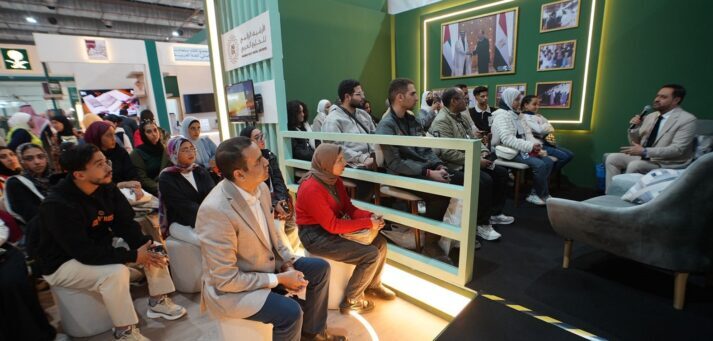
The Embassy of the United Arab Emirates in Cairo, in collaboration with the National Library and Archives (NLA), organized a seminar titled “Reading in the Age of Artificial Intelligence” on the sidelines of the 57th edition of the Cairo International Book Fair.
The seminar, held on the NLA platform at the Cairo International Book Fair 2026, featured His Excellency Ambassador Hamad Obaid Al Zaabi, Ambassador of the UAE to Egypt and Permanent Representative to the League of Arab States and children’s literature writer Samah Abou Bakr Ezzat. The event was moderated by Dr. Hussein Hosny, broadcaster at Alghad TV and drew a large audience of intellectuals, media professionals, and fair visitors.
In his opening remarks, His Excellency Ambassador Hamad Obaid Al Zaabi expressed his pleasure at participating in the seminar “Reading in the Age of Artificial Intelligence,” noting that it addresses a topic that brings together the depth of cultural heritage and the rapid pace of contemporary technological transformation. He also emphasized the deep-rooted fraternal and historical ties between the United Arab Emirates and the Arab Republic of Egypt in the cultural and knowledge spheres.
H.E. Al Zaabi affiremed that reading has, throughout history, constituted the cornerstone of building an informed and conscious individual, remaining the foremost means of acquiring knowledge and developing thought. He noted that while technology has transformed access to information, it cannot replace conscious reading or the human intellect, but instead complements them by enriching knowledge and widening its scope when properly employed.
He described Egypt as a “beacon of knowledge,” affirming that the UAE’s participation in the Cairo International Book Fair is a celebration of a long history of cooperation, as Egypt plays a major and inspiring role in publishing and reading movements in the region. He stressed that culture remains the strongest bridge connecting peoples in the face of the challenges posed by algorithms and artificial intelligence.
The Ambassador reviewed the UAE’s pioneering model in institutionalizing knowledge, referring to the National Reading Law of 2016, which is considered the first legislation aimed at instilling reading as a daily habit. He also highlighted the designation of March each year as Reading Month to engage all segments of society in tangible intellectual activities. In addition, he shed light on the Arab Reading Challenge initiative launched by His Highness Sheikh Mohammed bin Rashid Al Maktoum, praising Egyptian students who consistently top participation in this civilizational challenge.
Al Zaabi affirmed that the UAE does not view technology as an obstacle, but rather as a goal to be harnessed across all fields. He called on youth to use artificial intelligence tools for research and summarizing references, while not losing sight of the fact that “the human being is the center”. He reiterated that technology may write a text, but it will never possess the “wonder of discovery” or the emotional impact that words create in the reader’s soul.
He explained that the UAE supports “cultural digital transformation” through electronic platforms and smart libraries, based on the leadership’s vision that believes knowledge is a pillar of sustainable development, while fully preserving national identity and authentic values, in order to consolidate the country’s position as a global hub for cultural innovation.
The Ambassador concluded his speech by recalling a quote by the founding father, Sheikh Zayed bin Sultan Al Nahyan (may his soul rest in peace): “The book is the vessel of knowledge and civilization, and nations are not measured by their material wealth alone, but by the authenticity of their civilization.” He extended his appreciation to the pioneers and participants of the Cairo International Book Fair and invited the public to visit the UAE pavilions to explore the latest intellectual productions.
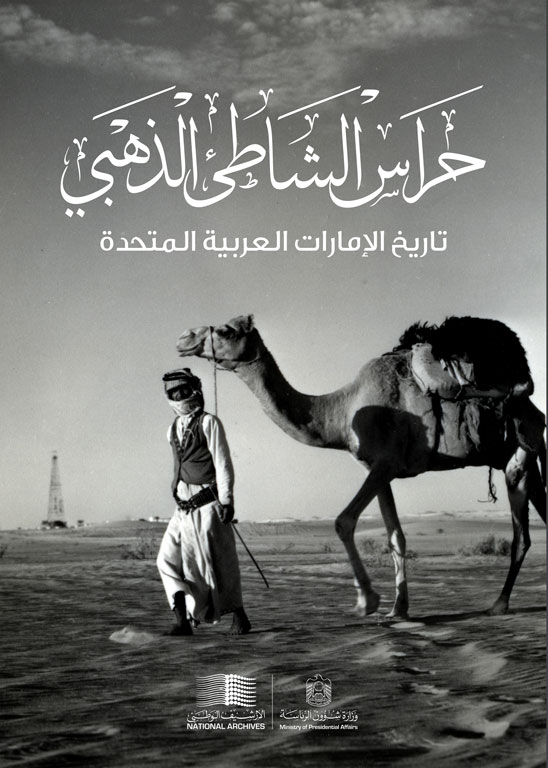
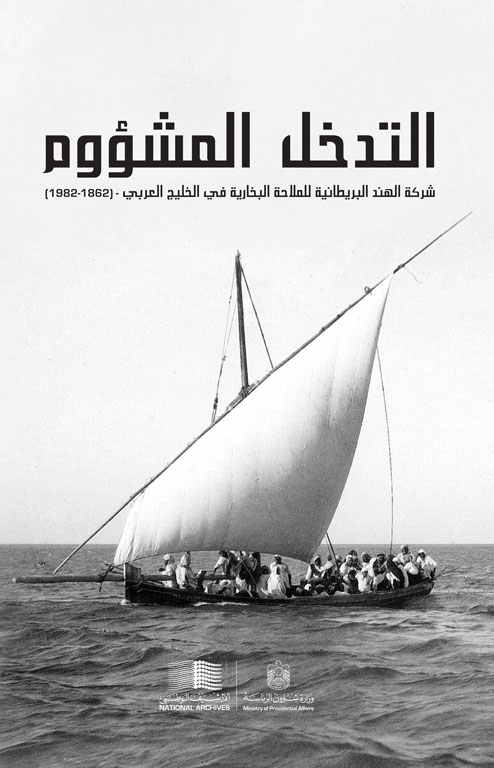
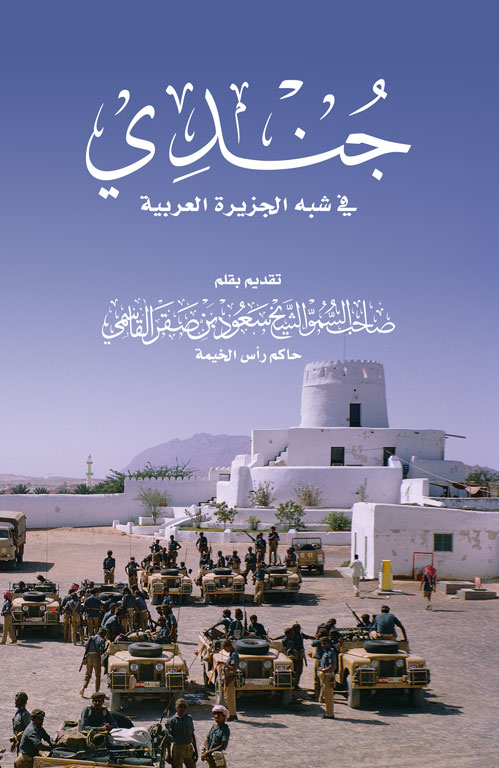
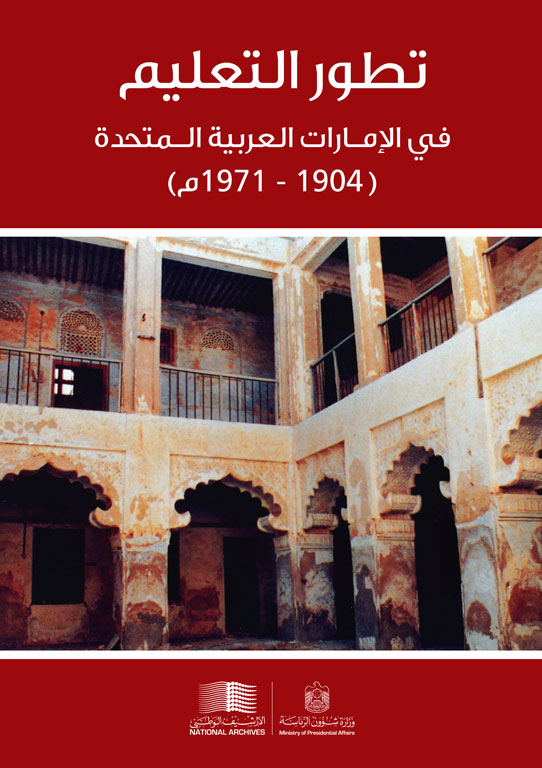
His Excellency also praised the National Library and Archives for its interest in enriching knowledge societies, for which purposeful reading is the cornerstone. He noted that the content of its publications aligns with this approach by providing accurate information to readers, valuable and authentic thought, and biographies of national and humanitarian figures that embody ideal role models for generations.
For her part, writer Samah Abou Bakr Ezzat said that reading is the true passport for a child’s mind toward the future, noting that books remain the safest companion for shaping a child’s emotional world and protecting it from the distractions of the virtual world.
She added that entering the age of artificial intelligence does not mean abandoning the printed book; rather, it requires developing tools to attract the “iPad generation.” She emphasized that artificial intelligence is a means that lacks the “emotional sincerity” an author instills in a text, which makes the human touch in children’s literature irreplaceable by rigid algorithms. She also stressed the need for a “smart balance” that makes technology a servant of reading, not a substitute for it.
Dr. Hussein Hosny of Alghad TV observed that while technology moves at a breakneck pace, reading remains our “unfailing compass.” He emphasized that even as screens dominate our attention, the book remains the most authentic voice in a noisy world.
During his moderation of the seminar, he affirmed that the United Arab Emirates has presented an inspiring model by making culture a way of life and reading a mission. He pointed that since its founding by Sheikh Zayed bin Sultan Al Nahyan (may his soul rest in peace), the UAE has believed that nations are not built by machines alone, but by the mind, the written word, and awareness, and that culture is not a luxury, but a protection of identity and an elevation of the human being.
He further noted that the UAE’s cultural evolution has reached new heights under President His Highness Sheikh Mohamed bin Zayed Al Nahyan, where reading is treated as a strategic civilizational policy. By prioritizing the human mind and its capacity to shape the future, the UAE embodies the timeless wisdom of its founder, Sheikh Zayed: “Knowledge is wealth, and we build the future on a scientific foundation.”